case study
How does a lesson barn build a school string that lasts more than three years?
Turnover in the school string is the quiet cost of most lesson programs. This follows how a barn rebuilt its herd around staggered ages, matched jobs and honest retirement.
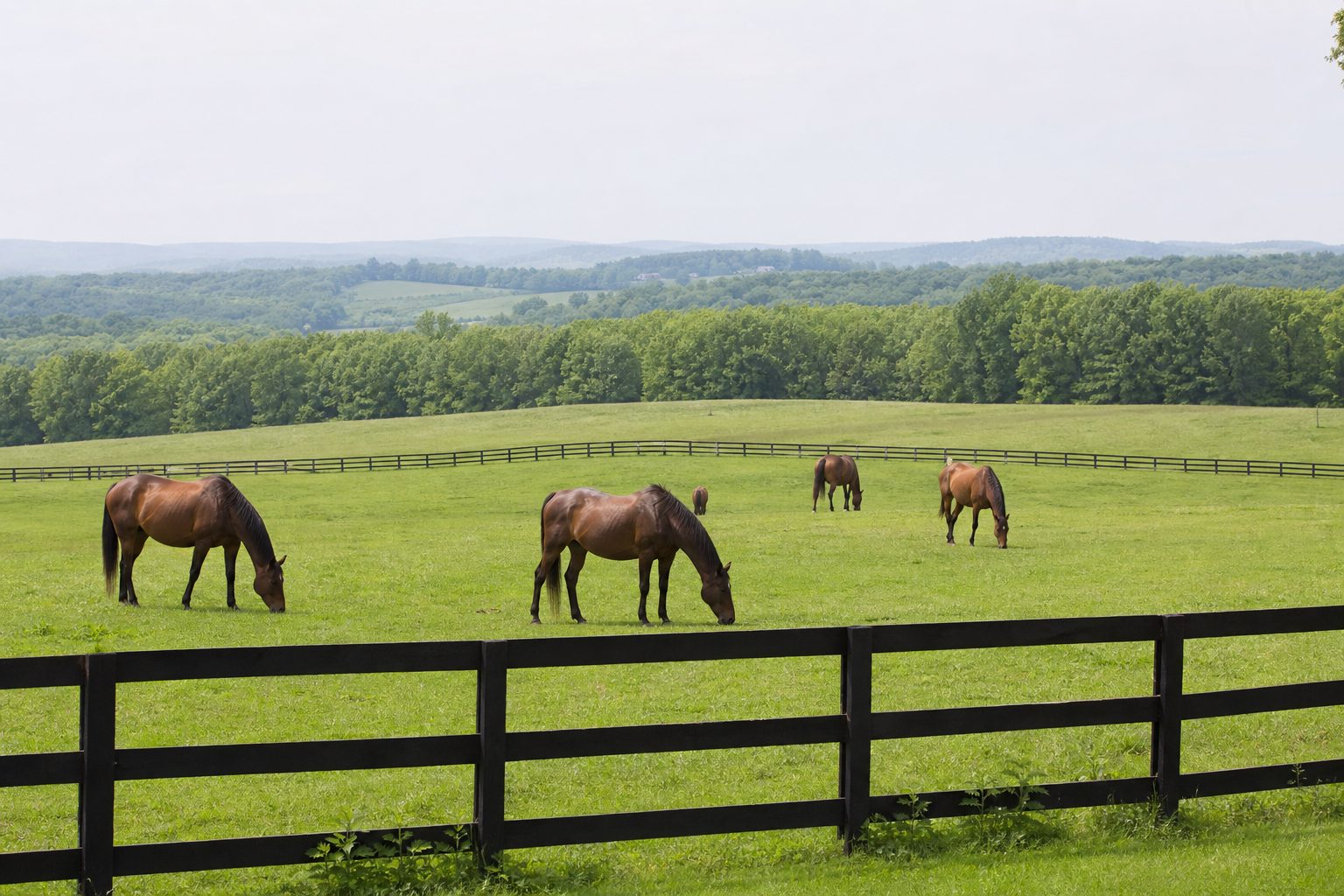
A school string lasts when it is built as a portfolio rather than as a series of separate rescues from crisis. That means ages deliberately staggered across a 15 year span, each horse assigned a narrow job it is genuinely suited to, and a retirement plan written before the horse needs one. Barns that do this replace one or two horses a year on their own timetable. Barns that do not replace four at once in a panic, at auction prices, in August.
The case below follows a 40 horse facility in the upper Midwest with roughly 130 lesson riders a week, over a three year rebuild of its 16 horse school string. Names and details are composited from how this work typically goes, and the dollar figures are illustrative assumptions rather than one barn's audited books. The structure of the problem, though, is the one nearly every lesson barn eventually meets.
The starting problem: too many horses doing the same job
The barn had 16 school horses. Eleven of them were between 17 and 22. All eleven had been bought in a four year window when the program expanded, and all eleven were doing the same thing: quiet walk trot canter work for beginners and advanced beginners.
The symptoms were familiar. Two horses were on daily joint support. One needed hock injections twice a year. The lesson program could not run a single intermediate group without pulling a boarder's horse, because nothing in the string could jump a course over 2 foot 3 without getting sour.
Worse, the risk was correlated. If three of those horses came off the schedule in the same season, and eventually they would, roughly 40 lesson slots a week would vanish at once. That is a revenue problem, but it is first a scheduling problem, because you cannot buy three suitable school horses in six weeks.
Keep reading: What should I check every morning before the first lesson of the day starts?
Staggering ages so the whole string does not retire together
The target the barn set was simple and worth copying. For a 16 horse string, aim for roughly four horses in each of four age bands.
| Band | Age | Role in the string | Target count of 16 |
|---|---|---|---|
| Coming in | 7 to 10 | Learning the job, used with confident riders and instructors first | 4 |
| Prime | 11 to 15 | The workhorses, full hours, hardest jobs | 5 |
| Steady | 16 to 19 | Beginners and lead line, reduced hours | 4 |
| Winding down | 20 and up | Two to three light hours a week, walk trot only | 3 |
Read the band structure as a replacement rate. If the average school horse serves from age 8 to age 21, that is 13 working years, and 16 horses divided by 13 years means you should be bringing in about 1.2 horses a year, every year, forever. Skip three years and you owe yourself four horses.
The barn had skipped roughly seven years. That was the size of the hole.
Matching each horse to a rider level band
The second change cost nothing and mattered more than anyone expected. Every horse got written into one of five bands, and riders were assigned by band rather than by whoever happened to be free.
- Lead line and walk only: tolerant of noise, a handler at the head, riders under seven.
- Walk trot: steady, forgiving of unbalanced hands, will not take off if a rider grabs.
- Walk trot canter: honest canter transitions, comes back reliably.
- Crossrails to 2 foot: takes a joke at a fence, does not stop.
- 2 foot 3 and up, courses: adjustable, rideable, keeps a lead change.
A horse may sit in two adjacent bands. Almost none belong in four. The moment they wrote it down, they could see that 11 of 16 horses were in the middle two bands and nothing at all served the top band. That drove the buying list.
The band system also protects the horses. A schoolmaster who can jump a 2 foot 6 course is wasted and slowly ruined doing eight walk trot hours a week with heavy hands on his mouth.
Keep reading: Where are riding school insurance premiums and student expectations heading next?
Trial periods and vetting before purchase or lease
The barn set a rule after one expensive mistake: no school horse enters the program without a two week trial in the actual job, and no purchase closes without a prepurchase exam that includes hock and front foot films.
The trial matters more than the ride. A horse can be lovely for a trainer and unusable for a program, because the school job is not hard riding, it is repetition, mounting blocks, crowded ring lines, a child dropping a crop, and being caught in the field by a 12 year old. Two weeks in that environment tells you what an hour in a sales ring never will.
Build the trial deliberately: three different riders, two different instructors, one crowded group lesson, one clinic or busy Saturday, and one session where the horse is tacked by a student rather than staff.
On vetting, treat the exam as a decision about workload rather than a pass or fail. Mild arthritic change in a 14 year old is not a reason to walk away from a horse you plan to work three hours a day. It is a reason to cap him at two, and to price accordingly.
Leasing versus owning the school string
The barn ended up with a mix: 12 owned and 4 leased. The reasoning is worth laying out because most barns default to owning without doing the math.
| Owning | Leasing | |
|---|---|---|
| Cash at the start | Purchase price plus vetting, often $6,000 to $20,000 | Usually nothing, or a small fee |
| Monthly | Keep only | Keep plus a lease fee, or free lease with keep in exchange for use |
| Vet risk | Yours entirely | Split by contract, read it carefully |
| Exit | You must sell, rehome or retire | Owner takes the horse back |
| Control of hours | Total | Limited by the lease terms |
Leasing is strongest for testing a level you have never served, and for covering a gap while you look for the right purchase. Owning is strongest for the prime band horses that will carry the program for a decade. Lease the experiment, own the backbone.
The free lease of a client's outgrown pony in exchange for board is common and can work, but it introduces a boarder into your scheduling decisions. Put use limits in writing: hours per week, which bands, who may ride, and who decides when the pony gets time off.
See how BarnBooked handles this for equestrian riding schools
Planning retirement and rehoming before the horse breaks down
The hardest change was cultural. The barn stopped waiting for a horse to become unusable and started retiring on a schedule with defined triggers.
The triggers they used: two consecutive months requiring daily anti inflammatory medication to stay comfortable in work, or an inability to hold up to two light hours a week, or a behavioral change under saddle that a vet works up and cannot resolve.
Hitting a trigger starts a six month clock rather than an ending. In that window the horse drops to lead line only, the barn looks for a companion home or a light adult amateur situation, and the family whose child rode him gets told early so the goodbye is not an ambush on a Tuesday.
Budget for it. Retiring one horse a year to pasture board at, say, $300 a month is $3,600 a year of cost with no revenue against it. That is a real line and pretending it does not exist is how barns end up working a 23 year old who should have stopped at 20.
What the rebuild cost and what it changed week to week
Over three years the barn brought in nine horses: five purchased at an average of about $11,000 including vetting and transport, and four leased. Call the purchase side roughly $55,000, spread across 36 months, or about $1,530 a month. Retirement and rehoming added another $250 a month on average. Those are the barn's assumptions, not a benchmark.
The return came from the top band. Adding two horses that could genuinely jump a 2 foot 3 course let the barn open four intermediate groups it had never been able to staff. At four riders and $75 a rider a week, that is $1,200 a week of new revenue against roughly $1,780 a month of rebuild cost.
The week to week changes were the ones the staff noticed. Nobody borrowed a boarder's horse anymore. Saturday stopped requiring the same three horses to work five hours each. Lesson cancellations for lameness dropped, because the load was spread across a string that was no longer entirely elderly.
What to do with this
Start with the census. List every school horse with its age, its level bands, and its honest sustainable hours per week. Sort by age. If more than a third of the string sits in one five year age band, you have a replacement cliff coming and you now know roughly when.
Then check whether your schedule respects the hours you just wrote down, because a plan the booking system ignores is a document, not a program. BarnBooked tracks each horse's level bands and weekly work limit, blocks bookings that would push a horse past them, and reports actual hours worked per horse per week so you can see the cliff forming years before it arrives, while there is still time to buy well instead of buying fast.