checklist
What should I check every morning before the first lesson of the day starts?
A short, fixed opening routine catches lameness, loose footing and broken tack before a student is on board. Here is the sequence and who owns each item.
Before the first student walks through the door, you need about forty minutes and a fixed order of operations. Hands on every horse that is scheduled to work, eyes on every helmet and girth that will be used, boots on the footing, and a final read of the day's lesson list against which horses are actually fit to do the job. That sequence, in that order, catches the three things that ruin a day: a horse that is off, tack that has quietly failed, and a booking assigned to a horse who cannot cover it.
The reason the order matters is that each step feeds the next. You cannot confirm the lesson list until you know which horses passed the leg check. You cannot brief staff until you know what changed. Barns that check in a random order end up making horse substitutions at 3:55 for a 4:00 lesson, in front of the parent who is already unhappy about something else.
Here is the routine, item by item, with a note on who owns each one. Assume a barn with twenty to thirty head, a handful of instructors, and lessons starting mid afternoon on weekdays and early on weekends.
Horse by horse: legs, eyes, appetite and attitude
This is the barn manager's job, or the owner's, and it does not get delegated to a working student in their first season. You are looking for change, not for perfection. Every school horse has a lump somewhere. What matters is whether the lump is new.
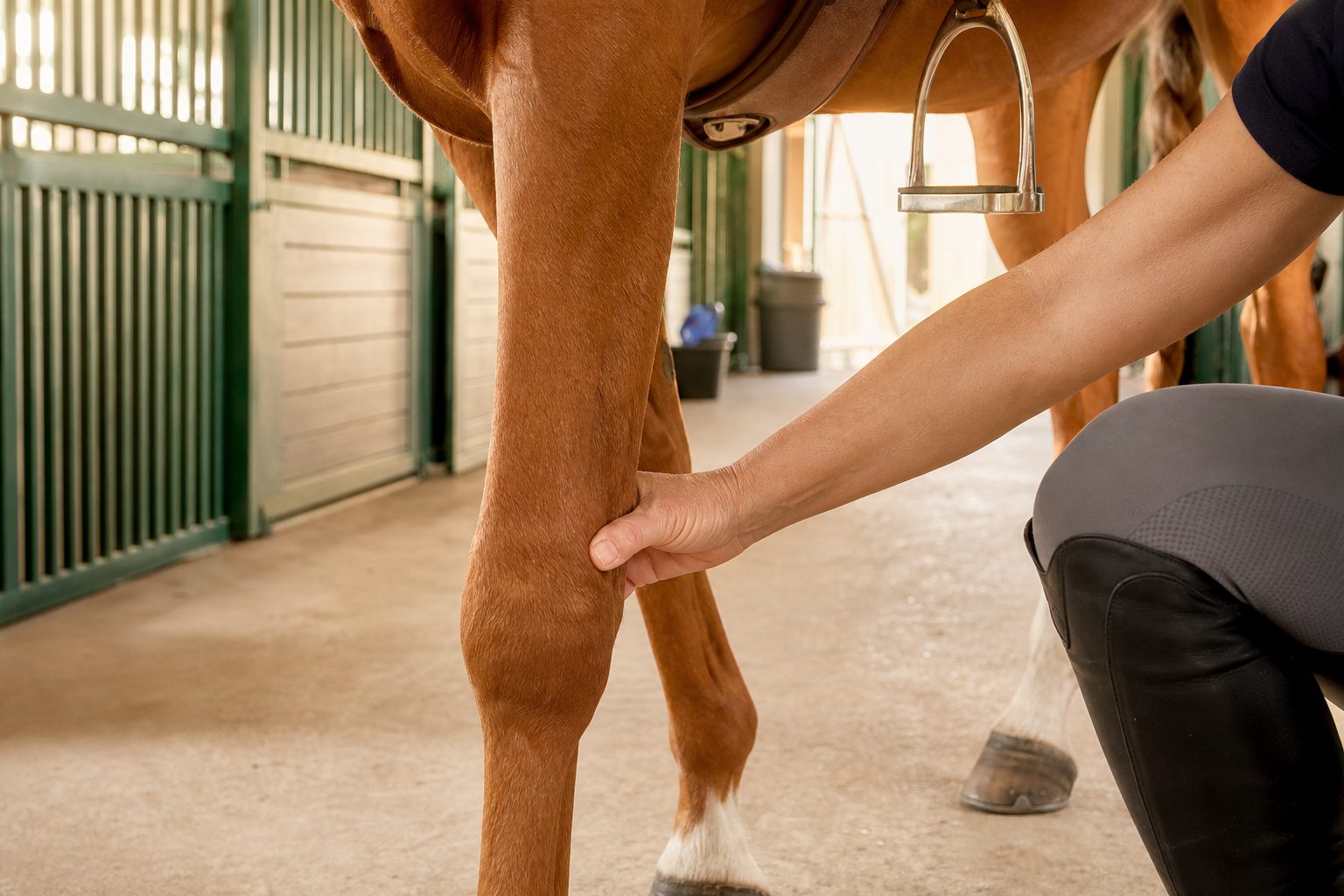
Run a hand down all four legs on every horse scheduled to work today. You are feeling for heat, filling and a reaction when you press. Compare left to right on the same horse rather than comparing horse to horse. A slightly thick left hind that has been slightly thick for four years is not news. The same leg warm and twice its usual size is.
The four signals
- Legs. Heat, swelling, a cut inside the fetlock from an overreach, a loose or missing shoe, a shoe with a risen clinch that will scrape the opposite leg.
- Eyes. Discharge, squinting or swelling. An eye issue is a same day vet call, not a wait and see, because a corneal ulcer gets worse by the hour.
- Appetite. Grain left in the tub from the morning feed on a horse who normally cleans up is the single most useful colic warning you get for free.
- Attitude. The gelding who always has his head over the door and today is standing in the back corner. You know your horses. Trust the read and check further.
Walk any horse you are unsure about a few strides on the hard aisle, in a straight line, on a loose lead. Then trot the same line if you can do it safely. Most morning lameness questions resolve in about ninety seconds this way. If it does not resolve, that horse comes off the board for the day and the substitution happens now, not later.
Keep reading: Where are riding school insurance premiums and student expectations heading next?
Tack and helmet inspection points that matter
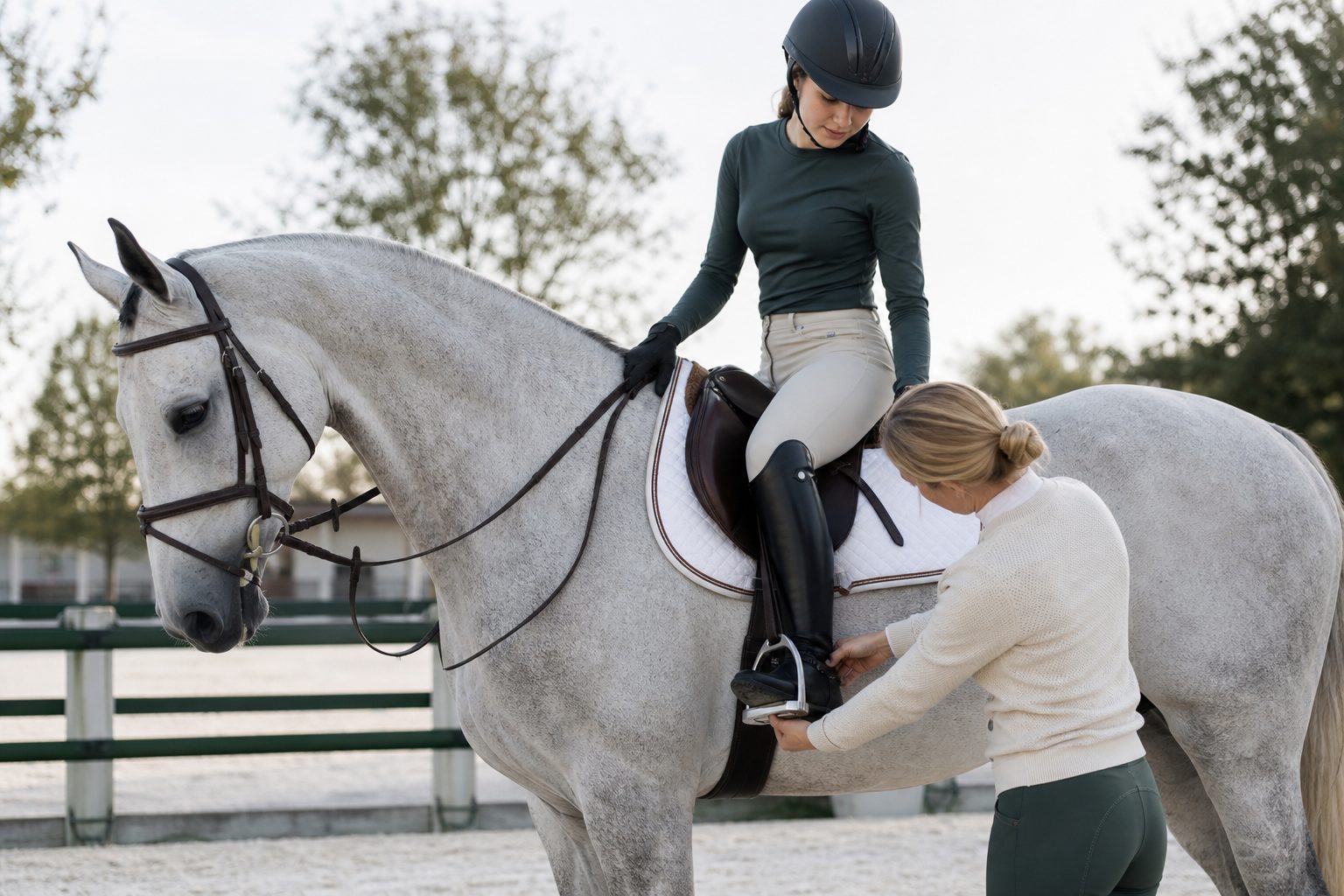
Whoever tacks up owns the check, but the standard has to be set by you and posted where they can see it. School tack fails at predictable points because it gets used by a dozen different people a week and none of them own it.
The points worth checking daily rather than weekly:
- Stirrup leathers at the buckle holes. The hole punched at the length everyone uses stretches and tears first. Look for elongated holes and cracking at the fold.
- Girth billets and elastic. Check the stitching where the billet meets the saddle tree, and whether the elastic on the girth end has gone slack or split.
- Reins at the bit end. Sweat and saliva rot leather here faster than anywhere else on a bridle.
- Cheekpiece and throatlatch keepers. Not a safety failure on their own, but a missing keeper usually means the bridle has been apart and reassembled by someone in a hurry.
- Barn loaner helmets. Check the harness webbing, the buckle and the shell for cracks. Any helmet that has taken a fall goes in the trash, not back on the shelf, and the way to make that happen is a labeled bin by the tack room door.
Loaner helmets need a retirement date written inside them in permanent marker on the day they enter service. Manufacturers generally advise replacement roughly five years from the date of manufacture, and barn use is harder than private use. Writing the date on arrival means you are not squinting at a molded stamp in the dark five years later.
Arena footing, gates and jump equipment
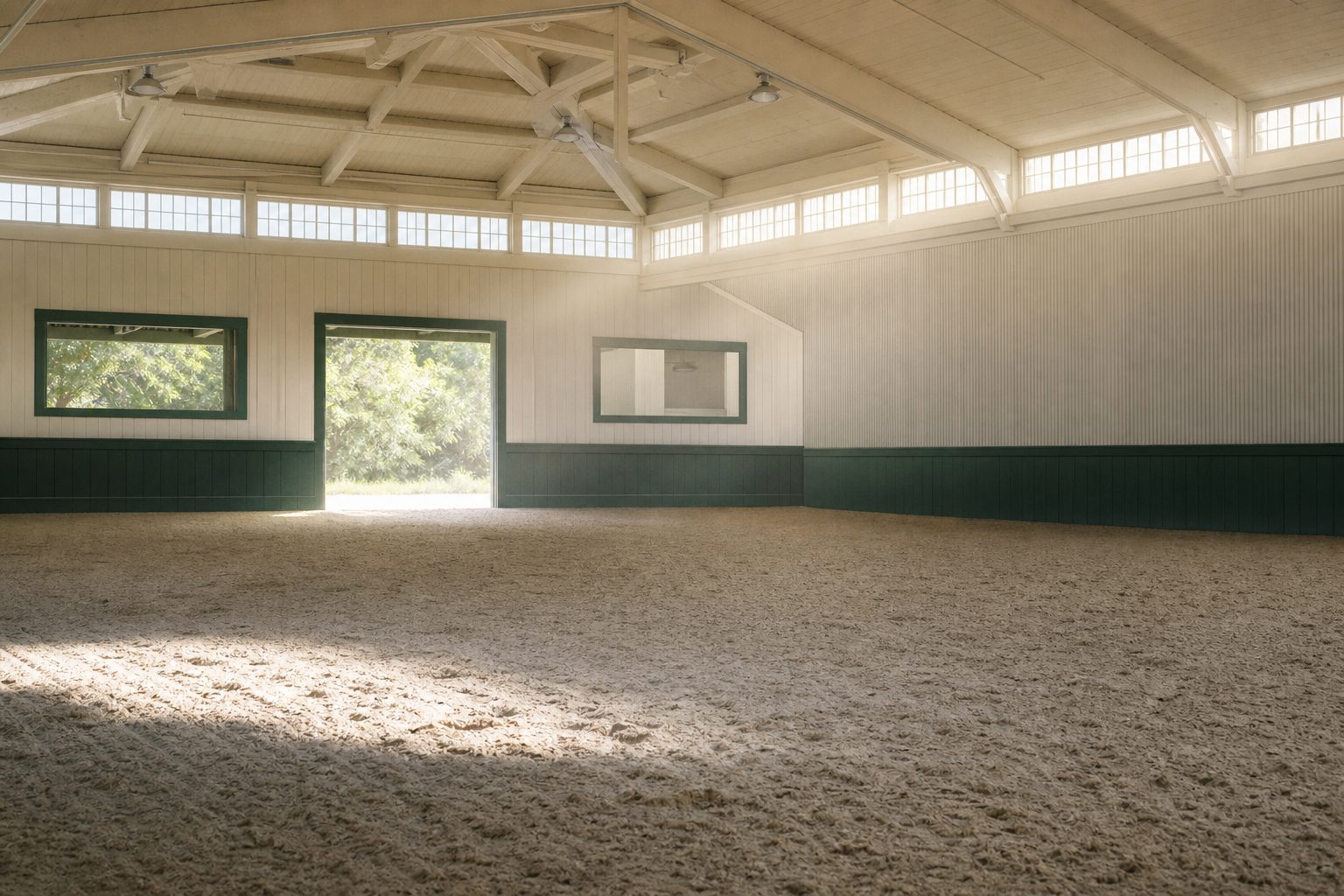
Walk the arena. Do not look at it from the door. Footing problems show up under your boots before they show up to your eye, particularly the hard track that develops on the rail where every horse travels, and the deep spot in the corner where the drag turns.
Check that gates latch and that the latch is on the outside where a horse cannot catch a stirrup on it. Check standards for cracked cups and pins, and poles for splinters and split ends. If you jump, count the cups. A cup that walked off with a lesson last night is a cup that is somewhere on the ground waiting to be stepped on.
Outdoors, add a lap for holes, storm debris and any board that has come loose on the rail. This is a five minute job that a responsible teenager can do well if you give them the list.
Keep reading: What actually happens when you match riders to horses by level instead of habit?
Water, heat and weather calls for the day
Every trough and every automatic waterer gets touched, not glanced at. Automatic waterers fail silently. Press the paddle and watch it refill.
Make the weather call in the morning, once, and communicate it once. Late day thunderstorms in the summer and freezing rain in the winter are both predictable enough by 8 a.m. that you should not be calling families at 3 p.m. The reasonable rule most barns settle on:
| Condition | Call |
|---|---|
| Lightning within audible thunder | Everyone off, out of the arena, thirty minute clock restarts on each strike |
| Heat index above roughly 100F | Walk and trot only, shorten to 30 minutes, no doubling horses |
| Ice on the outdoor or the walk to the barn | Indoor only, or cancel, and say so by morning |
| Footing frozen and rutted | Cancel jumping, flatwork at reduced pace |
Whatever your thresholds are, write them down and hand them to families at signup. The argument you avoid is the one where a parent believes the cancellation was arbitrary.
Confirming which horse each booked lesson is riding
This is the step barns skip, and it is the one that costs the most. You now know which horses are sound, which are already at their limit for the week, and which are on a farrier or vet appointment. Take the day's lesson list and confirm the horse for each rider against that knowledge.
The failure mode is a horse who looked fine at 8 a.m. but is already down for four lessons because two instructors both assumed he was free. School horses in regular lesson work are generally kept to a defined daily and weekly workload, and the only way that holds up is if the limit lives somewhere both instructors can see.
A whiteboard cannot enforce a limit. It records a decision after someone has already made it. Booking software that knows each horse's daily and weekly cap will refuse the fifth lesson before it becomes an argument in the aisle, which is why a lot of barns move that decision out of the morning routine entirely and into the booking itself.
See how BarnBooked handles this for equestrian riding schools
Staff briefing and substitute plan
Five minutes, standing up, before the first instructor teaches. Cover three things: horses off the board and why, tack pulled from service, and any rider whose usual horse has changed so the instructor can say something to the family before the family says something to you.
Name the substitute plan out loud. If your 5 p.m. instructor calls out, who teaches? If the answer is that you scramble, then the answer is really that lessons get canceled and refunded. Having a named backup for each teaching block, even if it is you, converts a crisis into an inconvenience.
Logging what you found so patterns show up
A morning check that lives only in your head is a check you cannot use. Write down what you found, even when the answer is that everything was normal. Two lines per day is enough.
The value is entirely in the pattern. A horse who shows up in your notes as slightly off on Tuesdays, three weeks running, is telling you something about Monday's schedule. That is a conversation with your vet and farrier backed by dates rather than impressions. It is also the record you want if a family ever questions whether a horse should have been in a lesson.
Making the routine stick
The checks above take one person about forty minutes and cost nothing but the discipline to do them in the same order every day. The step that keeps slipping is the last horse assignment check, because it depends on holding a week of workload in your head at 7:45 in the morning.
That part is worth handing to a system. BarnBooked tracks each horse's daily and weekly work limit, the instructor's schedule and the rider's level together, so a lesson cannot be booked against a horse who is already at capacity or flagged off work. You still walk the legs and press the waterer paddle. You just stop discovering the scheduling problem forty minutes before the lesson.